The Petaluma Price Puzzle: Why the Same Million Dollars Buys Two Very Different Houses
July 23, 2026
July 23, 2026
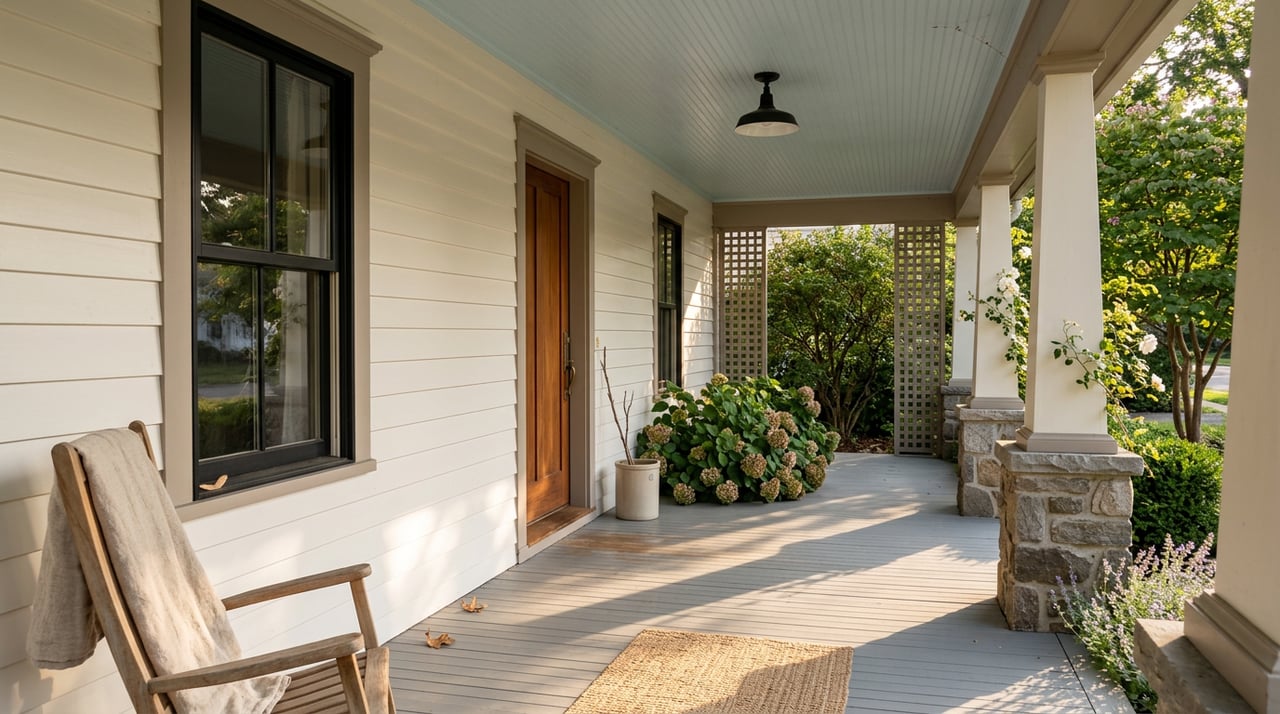
Two homes in Petaluma close at the same price in the same quarter. One sits on a 0.057 acre lot across from Petaluma High School, built in 1927, with 1,254 finished square feet and a converted garage. The other is a newer three or four bedroom on the east side with a modern floor plan, an attached two car garage, and a lot big enough to consider an ADU. Both trades cleared at roughly the same number. Only one of them gave the buyer a house.
That gap is the story Petaluma's citywide median refuses to tell.
Depending on the source, Petaluma's median sale price in the first half of 2026 lands somewhere between $874K over the trailing three months ending May 2026 and $998,000 in June 2026 per Movoto, with Q1 coming in at $937K, down 6.3% year over year. Pick your number. It doesn't matter.
The number that matters is the one the citywide figure buries. In February 2026, Western Petaluma homes sold for a median of $1.1M, at $622 per square foot. In the same window, Southeast Petaluma's median was $917K, at $471 per square foot. West Petaluma proper is running $985K at $647 per square foot as of last month.
That is a $150 to $175 per foot delta inside the same zip-adjacent city. On a 2,000 square foot house, that's $300,000 to $350,000 of pure location premium — before you've evaluated a single kitchen.
Here is the puzzle: total prices between the two sides are closer than the per-foot numbers suggest. Buyers on the west aren't paying more in absolute terms. They are paying the same and getting less house. The premium is being collected in square footage they never take delivery of.
Ask a Westside seller and they will tell you the premium is character. Ask a Westside buyer and they will tell you it is walkability. Both are partly right. Neither is the whole answer.
The physical explanation starts with what actually exists on each side. The west holds the largest collection of surviving Victorian homes in Northern California, spared by the 1906 earthquake, layered with 1920s bungalows and 1950s ranchers built between them as land was sold off from the original estates. Most of that inventory is small by modern standards, on lots that were platted before the automobile.
The east is a different physical product. Geographically the East side sits at the foot of Sonoma Mountain, houses the Petaluma campus of Santa Rosa Junior College, is home to Lagunitas Brewery and the Brew District, and has several relatively new residential neighborhoods with more modern houses than West Petaluma. The floor plans are open. The lots are bigger. The garages fit two cars without a three-point turn.
So the per-foot premium is really pricing three things at once: proximity to a walkable downtown grid, scarcity of pre-1940 architecture that cannot be replicated at any price, and — this is the part most buyers miss — the option value of never needing a car for coffee, groceries, or a meal.
That last one has been quietly repricing over the last eighteen months. The stretch of Petaluma Boulevard just north of Washington Street, now called NoWa or NoBo, is going through a renaissance with new dance, art, food, and "curiosities" businesses opening. Blanton's Boot and Hat is opening at 216 Petaluma Blvd North as a luxury western wear experience. Taste Petaluma, a four-brand tasting destination featuring Barber Cellars wine, Barber Lee Spirits, Petaluma Cheese Shop, and Night Cap Dessert Bar, is opening in July 2026 at 120 Washington Street. Every one of those additions is a Westside walkability asset. None of them are priced into last year's comps yet.
Meanwhile the east's amenity story is expanding in a different direction. Boot Barn and Hobby Lobby just opened in the former Kmart at Plaza North on North McDowell Boulevard, with a second Grocery Outlet opening between them on Aug. 27, ending more than six years of vacancy in the 90,000 square foot space. That is real household utility. It is also, unambiguously, car-based. The east is getting more convenient. The west is getting more strollable. The market is pricing those two trajectories very differently.
The per-foot gap is only half the mid-funnel story. The other half shows up during the transaction, and it moves in opposite directions on each side.
On the west, the friction is what you can't change. Older houses come with older systems. Beyond the obvious inspection items — knob-and-tube runs, galvanized supply lines, foundations that predate seismic code — there is a paperwork problem. Many Westside homes sit in historic contexts, exterior changes can require review, and buyers who want to add, expand, or change materials should plan early. That review process is not a rubber stamp. It shapes what a renovation budget can actually accomplish, and it means the 1,254 square foot Victorian you bought is likely to stay 1,254 square feet.
There is also a flood consideration that shows up differently on each side. Western Petaluma has 23% of properties at risk of severe flooding over the next 30 years, with 625 properties likely to be severely affected. Southeast Petaluma's exposure is materially lower. Lenders notice. Insurers notice. Any offer on a Westside home near the river deserves an early conversation about the flood zone map before the inspection contingency runs.
On the east, the friction is the reverse — what you can do that you didn't know you could. Eastside lots can offer more room for ADUs or additions, and buyers should verify local zoning, utility availability, and permitting timelines with the City of Petaluma. This is where the per-foot math gets interesting. A buyer who pays $471 per foot for an 1,800 square foot Eastside home on a lot that permits a 700 foot ADU is buying at a very different effective price than the sticker suggests. The Westside buyer on a historic parcel does not have that lever.
Both sides sit inside the Petaluma City Schools district, which spans both East and West Petaluma and operates as an open district, meaning it allows students to attend schools outside of traditional neighborhood boundaries. So the school-boundary premium that distorts pricing in other Sonoma County towns is muted here. That's useful to know when you are trying to isolate what the price gap is actually paying for.
Here is the practical translation for someone about to write an offer.
At $874K to $998K citywide, the market is moving. Homes are moving in 27 days, inventory is at 0.32 months of supply, and properties are selling at 100.34% of asking. But that composite hides two different games. In West Petaluma, homes sell in 21.5 days. In Western Petaluma proper, February 2026 days on market ran to 57, up from 48 the year before. Same city, two very different velocity signals depending on which sub-inventory you're competing in.
The right question on any given Petaluma comp is never "how does this compare to the median." It is closer to three questions:
A buyer who answers those three honestly usually stops caring about the citywide median inside a week.
Is the west side always more expensive per square foot? Almost always in current data, yes. But per-foot pricing on updated Westside homes can run higher for fully renovated historic homes and downtown-adjacent condos, with the premium reflecting walkability, character, and cultural access. Unrenovated Westside stock trades at a discount to that, sometimes a steep one, because the renovation path is constrained.
If I want more house for the money, does that mean the east side automatically wins? It means the math changes. East often offers more home for the total price, with larger lots and newer floor plans, though absolute prices can climb with lot size and updates. Whether that "wins" depends on whether you would actually use a bigger house and yard, or whether you would trade both for a fifteen minute walk to a downtown restaurant.
What about the commute question? Both sides feed onto US-101. West Petaluma offers the most direct access to the downtown SMART station, though park-and-ride options support Eastside commuters too. For a household that will actually board the train more than twice a month, the Westside station proximity is worth pricing into the offer. For a household that drives, it isn't.
Should I worry about buying at the top? Signals are mixed. The trailing three months ending May 2026 showed the median down 6.5% year over year, while forecasts point to Petaluma home prices rising 2 to 4% in 2026 as conditions normalize. In a market moving at 0.32 months of supply, the answer is almost always to underwrite the specific house, not the cycle.
If you're comparing sides of Petaluma and want a per-foot read on a specific address rather than a citywide average, that is the conversation worth having before you write an offer. Reach out to Alexander Goodman and let's connect.
Stay up to date on the latest real estate trends.
Experience a client-focused approach backed by local knowledge, honest communication, and dedication to your success.