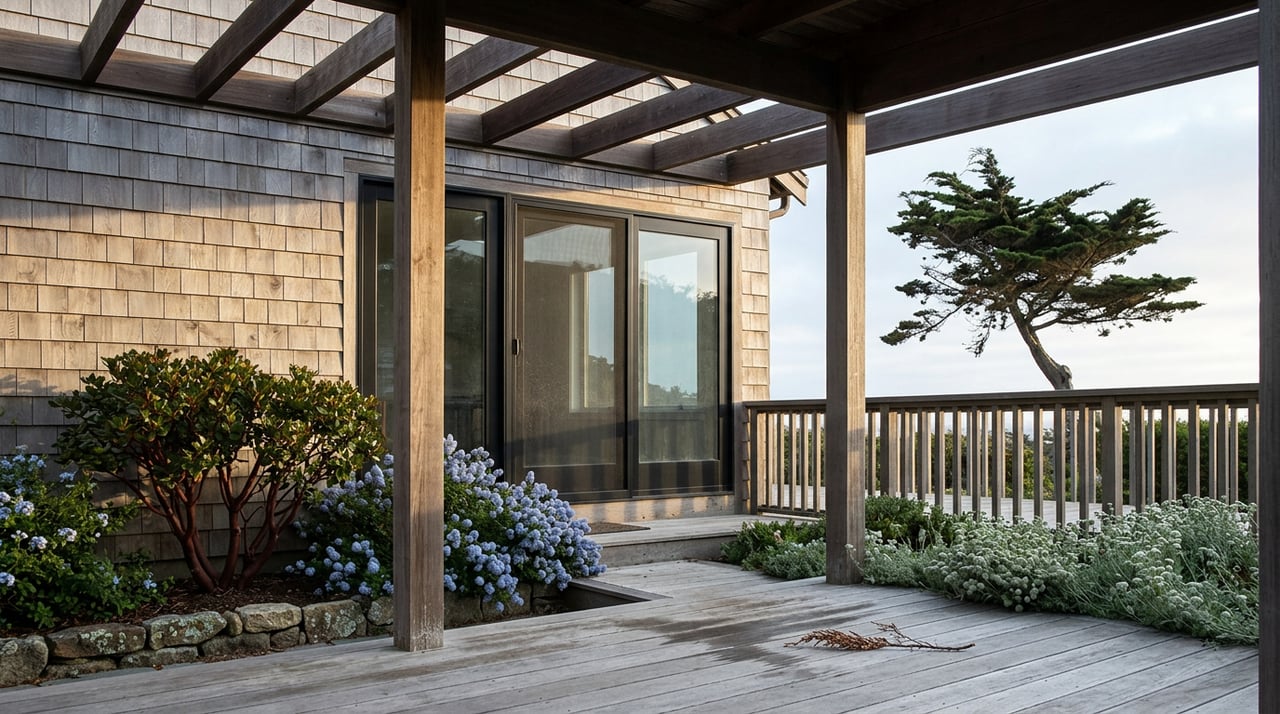
Bodega Bay's Vacation Rental Rules Aren't Looser. They're Just Older.
September 24, 2026
September 24, 2026
Every buyer who calls me about a Bodega Bay vacation home leads with the same line: it's coastal, so the county's tough new short-term rental rules don't really apply out there. That's technically true. It's also the wrong thing to be relieved about.
Sonoma County's inland overhaul, adopted in stages through 2023, gutted new vacation rental eligibility across the unincorporated county. Estimates put the reduction at around 91 percent of previously eligible properties once the new exclusion zones, density caps, and zoning restrictions took effect. Bodega Bay sits outside that overhaul because it's inside the California Coastal Zone, which runs under its own permitting track through Permit Sonoma and the California Coastal Commission. So far, the assumption holds.
Where it breaks down is the idea that coastal means unregulated, or even lightly regulated. Bodega Bay isn't a loophole in Sonoma County's rental crackdown. It's a different, older crackdown that got there first.
By March 2023, before the county even finished writing its inland ordinance, unhosted short-term rentals already made up roughly 20 percent of Bodega Bay's housing stock, one of the highest concentrations anywhere in the county's coastal zone. That number is what put Bodega Bay on the county's radar in the first place. The county's own summary report on the ordinance singled out Bodega Bay and the Russian River corridor by name, noting that R1-zoned areas in both places had historically served visitors to nearby recreation and resort areas, and that the modest, small-lot summer cabins there had become a meaningful supply of below-market housing as more of them converted to full-time residences.
That framing matters because it tells you what problem the county was actually solving. It wasn't trying to open the coast to more rental investment. It was trying to protect the year-round housing stock that vacation rentals were displacing, in a town of about 1,000 residents where every conversion counts.
The county's fix was to prohibit new vacation rental permits in R1 zoning, county-wide, coastal zone included. The categories that remain eligible are the agricultural and rural designations: Rural Residential, Agricultural Residential, Land Extensive Agriculture, Diverse Agriculture, and Resources and Rural Development. R1, R2, R3, and Land Intensive Agriculture are out, full stop.
Here's the friction. A lot of what draws buyers to Bodega Bay in the first place, the small, weathered beach cottages in South Harbour, Central Bodega Bay, and around Salmon Creek, sits on exactly the small residential lots the R1 designation was built for. The zoning that made those neighborhoods livable and walkable to Doran Regional Park or the Bird Walk Coastal Access Trail is the same zoning that now locks a new owner out of a vacation rental permit.
| Zoning Designation | New Vacation Rental Permit? |
|---|---|
| RR, AR, LEA, DA, RRD | Allowed, subject to caps and exclusion zones |
| R1 | Not allowed, county-wide including coastal zone |
| R2, R3, LIA | Not allowed |
If rental income is part of the plan, the zoning check has to happen before the offer, not after. Sonoma County's parcel search and zoning lookup tool through Permit Sonoma will tell you which category a specific address falls into, and it's worth running before you fall for a listing photo.
Even for properties that clear the zoning test, there's a second trap that catches buyers who've done their homework on everything else. Vacation rental permits in Sonoma County do not transfer when a property sells. It doesn't matter if the current owner has a fully booked calendar and glowing reviews. The permit expires on transfer, and the new owner has to apply from scratch and meet whatever the current rules happen to be on that day.
This is true everywhere in the county, coastal zone included, but it stings more in Bodega Bay because the cap is already tight. An active listing advertising strong rental income is showing you what the current owner built, not what you're buying. Before writing an offer on anything marketed as an income property here, ask directly whether the existing permit is transferable in any form and get the answer from Permit Sonoma, not the listing agent.
A quick local's read on this: I've watched buyers assume a successful Airbnb history is collateral that travels with the deed. It isn't. Treat every Bodega Bay vacation rental purchase as a fresh application, and price the uncertainty into your offer.
If a property does clear both the zoning and permit hurdles, the next number worth knowing is where the income curve bends. Recent 2026 market analysis of Sonoma County's eligible rental inventory found that in Bodega Bay, moving from a three-bedroom to a four-bedroom vacation rental raises median annual income by roughly 70 percent, from about $75,000 to about $127,000. That's a real jump, and it's the strongest argument for prioritizing bedroom count over square footage or finishes when comparing two otherwise similar coastal properties.
The fifth bedroom is where the story changes. In Bodega Bay, going from four bedrooms to five adds essentially nothing to median income. Compare that to Sonoma, where the same jump nearly doubles income, because that market draws large groups and luxury travelers willing to pay for extra space. Bodega Bay's rental demand doesn't scale the same way. A well-run four-bedroom home is the practical ceiling here. Paying a premium for a fifth bedroom you can't monetize is money that doesn't come back at resale either, since the next buyer faces the same ceiling.
Prestige and return on investment aren't the same thing, and Bodega Bay is a clean example of why. Gross yield, meaning annual rental income divided by purchase price, tells a different story than the sticker price does. On the coast around Bodega Bay, eligible homes run close to $1.4 million against roughly $80,000 in median annual income, which works out to about 6 percent gross yield. Compare that to Guerneville and the Russian River corridor, where eligible homes typically run $600,000 to $800,000 against a median income near $60,000, producing a gross yield closer to 8 to 10 percent, the best ratio in the county.
None of this makes Bodega Bay a bad buy. It makes it a lifestyle purchase with rental income as a supplement, not the other way around. If yield is the primary goal, the numbers point inland to the river. If the goal is a coastal retreat that occasionally offsets its own costs, Bodega Bay still does that job well. Just don't confuse the two goals when you're comparing listings.
One place Bodega Bay does simplify the math: the town median sale price, which has hovered between roughly $1.2 million and $1.5 million across 2025 and into 2026 depending on the sample and the mix of waterfront sales, is a reasonably honest stand-in for what an eligible rental property actually costs. That's not true in Healdsburg or Sonoma, where the town median sits well below what a genuine eligible vacation rental runs. In Bodega Bay, the number on the portal and the number you'll actually pay are closer together than in most of the county.
There's a live piece of state legislation that could change this calculus before the year is out. Senate Bill 1318, authored by Senator Ben Allen, would require the California Coastal Commission to approve local restrictions on non-owner-occupied short-term rentals in the coastal zone, even when other visitor accommodations exist, a standard the Commission has historically resisted meeting. The bill cleared its April 2026 committee vote and was held in committee under submission after a May 14, 2026 hearing. It hasn't become law, and even if it does, any local restriction still has to go through its own approval process afterward.
What it signals is more important than its current status. The Coastal Commission has long been the reason towns like Bodega Bay couldn't simply ban non-owner-occupied rentals the way inland jurisdictions have. If SB 1318 eventually passes, that backstop weakens, and Sonoma County's coastal zone could see restrictions that look more like what already happened inland in 2023. Anyone buying a Bodega Bay property today for rental income should treat this as a variable, not a footnote.
Does buying in the Coastal Zone mean I skip Sonoma County's vacation rental permit process entirely? No. Coastal zone properties still need a zoning permit, a vacation rental license, and Transient Occupancy Tax registration through the county. The coastal zone adds an additional layer of California Coastal Commission oversight on top of that, not a shortcut around it.
If a Bodega Bay home already has an active vacation rental permit, can I just take it over? No. Permits do not transfer with the sale. You'll need to submit a new application and meet current eligibility rules regardless of the property's rental history.
Are ADUs eligible for vacation rental permits in Bodega Bay? No. Accessory dwelling units cannot be operated as vacation rentals under current county rules, coastal zone included.
What's the maximum guest count allowed? Two guests per bedroom plus two additional guests, up to 12 total, with children under three not counted toward the limit.
If you're weighing a Bodega Bay purchase against other North Bay coastal or river options, I'd rather walk you through the zoning and permit specifics on an actual address than have you find out after closing. Reach out to Alexander Goodman and let's connect.
Stay up to date on the latest real estate trends.
Experience a client-focused approach backed by local knowledge, honest communication, and dedication to your success.