Buying Near Sonoma Plaza? The City Just Changed Who Signs Off on Your Remodel
August 20, 2026
August 20, 2026
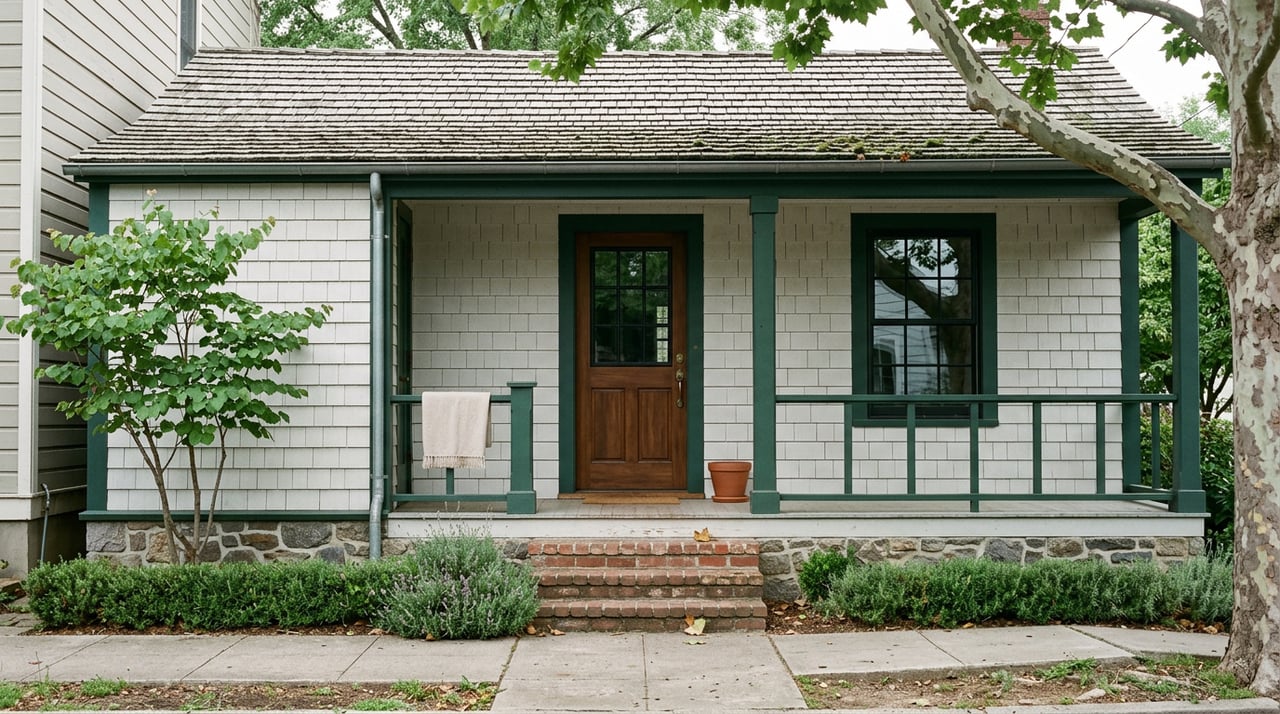
Picture the scene: you've found a cottage two blocks off Sonoma Plaza, the kind with a deep porch and a kitchen that hasn't been touched since Nixon was in office. You're already mentally bumping out the back wall for a bigger kitchen and swapping the single-pane windows. You assume that's a contractor conversation and a standard building permit, the same as anywhere else in Sonoma County.
For a meaningful number of addresses in this part of town, that assumption is wrong, and the reason has nothing to do with the price you're paying. It has to do with which city commission has to approve your plans before a contractor ever picks up a hammer, and that commission just went through its biggest structural change in years.
Some of the most walkable, most photographed blocks near the Plaza sit inside what the city calls a Historic Overlay Zone. One documented example is the Samuele Sebastiani Residential Historic District, confirmed as recently as a 2024 city filing on a residential remodel there. A property inside a district like this gets classified as either "contributing," meaning the structure itself helps define the district's historic character, or "non-contributing," meaning it doesn't carry that same weight even though it sits inside the boundary.
That classification is not cosmetic. Under the City of Sonoma's municipal code, any project that alters, enlarges, remodels, repairs, or changes the exterior of an existing structure inside a historic zone requires design review before a building permit can be issued or work can start. For a contributing structure, the reviewing body also has to confirm the project meets the Secretary of the Interior's Standards for Rehabilitation, the same federal preservation benchmark used across the country for historic building work. In the 2024 filing for the Sonoma Valley property mentioned above, that standards analysis was required and completed before the remodel could move forward.
None of this shows up on a listing sheet. It shows up when your architect calls the Planning Division to ask why a kitchen addition needs a public hearing.
Here is the part that hasn't made it into most buyer conversations yet. For years, the body responsible for this kind of review carried a long name and a long list of duties: the Design Review & Historic Preservation Commission handled everything from business signage to multi-family building massing to historic-district rehabs, all on the same monthly agenda.
By the middle of 2025, the city had followed through on a reform its own commissioners had been pushing for years. Multi-family design review and routine, non-historic modifications moved to the Planning Commission and Planning Department. The remaining body was renamed the Historic Preservation Commission, and its docket was narrowed to one job: evaluating projects inside the city's historic overlay zones.
Patricia Cullinan, president of the Sonoma Valley Historical Society, had told the earlier version of this commission that focusing its attention this way would be a "real boon to the community." She also pointed to a second reason the workload was about to grow rather than shrink: a rolling wave of local houses would keep crossing the 50-year mark that makes a building eligible for historic consideration in the first place. Run that math forward from today and it lands on homes built around 1976, meaning plenty of the mid-century houses near the Plaza are only now entering the window where this question applies to them.
Put those two facts together and you get a commission with a narrower docket but a fuller one. Every project that reaches this group now is, by definition, a historic-overlay question. There is no routine signage review sitting next to it on the agenda to make the meeting move faster. If your cottage sits inside the Samuele Sebastiani district or another City of Sonoma historic zone, your remodel is not being reviewed by a generalist body anymore. It's being reviewed by a commission whose entire reason for existing is your kind of project.
| Before mid-2025 | After the restructuring | |
|---|---|---|
| Commission name | Design Review & Historic Preservation Commission | Historic Preservation Commission |
| What it reviewed | Signage, multi-family design, non-historic remodels, historic-overlay projects | Historic-overlay zone projects only |
| Non-historic multi-family review | Handled by this commission | Moved to Planning Commission and Planning Department |
| Whose attention is on your project | Split across a broad docket | Concentrated entirely on historic-overlay cases |
The city's own reform notice from June 2025 described the goal plainly, calling for clearer review-authority roles and expanded exemptions for projects on non-historic homes, while explicitly maintaining protections for historic resources. Read that as confirmation of the same split: the easy cases got easier, and the historic cases kept, or gained, scrutiny.
One detail is still worth confirming rather than assuming. Reporting from mid-2025 described a proposed shift in this commission's meeting cadence from monthly to quarterly. As of October 2025, the city's own commission page still listed a standing meeting on the second Tuesday of each month, so the final cadence for this narrower docket may still be settling out. If your renovation timeline depends on catching a specific meeting date, that is a question worth asking the Planning Division directly rather than assuming based on a schedule you found online.
A standard Sonoma County remodel runs roughly $150 to $350 or more per square foot depending on scope and finish level. That range holds whether or not you're inside a historic overlay. What changes for a contributing property is everything layered on top of the construction cost: a Historic Resource Evaluation, peer reviewed before the city will confirm the property's contributing status, and a public hearing where the commission's decision can be appealed within 15 calendar days if a neighbor disagrees with the outcome.
There is a piece of genuinely good news buried in this process. Projects that meet the Secretary of the Interior's Standards and don't increase floor area by more than 50 percent typically qualify for a categorical exemption from full environmental review under state law. The 2024 filing referenced above cleared on exactly that basis. The commission's approval is the real gate here, not a lengthy environmental study, which means a well-documented, standards-compliant rehab has a clear path even inside a historic district. It just isn't a quick one, and it isn't free.
It's tempting to read Sonoma's numbers and conclude the market has softened. In a market update published in July 2026, the average house price in the city was reported at $1.11 million, down 9.0 percent from a year earlier. But over the three months ending May 2026, the median sale price told a different story: $1.2 million, up 4.7 percent year over year, with 43 homes sold in May 2026 compared to 35 in May 2025.
An average is dragged around by whatever sits at the extremes. A median is not. When the average falls while the median climbs, the simplest explanation is that fewer ultra-high sales are pulling the top of the range down, while the broader middle of the market, the price band where most historic-district cottages actually transact, is holding or gaining. If you're shopping in that middle band near the Plaza, the "cooling" headline built on the average number is not describing your segment. The segment you're competing in is the one that's up.
That context matters here because it explains why buyers keep absorbing the historic-overlay friction rather than walking away from it. The homes carrying this extra layer of review are, by the numbers, the ones holding value best.
Does a non-contributing classification mean I can skip review entirely? No. A property inside a Historic Overlay Zone still requires design review for exterior work even if it's classified non-contributing. The design criteria applied are simply different from those used for a contributing structure.
Does this apply to interior remodeling? The trigger under city code is a change to the exterior of a structure. Interior-only work generally sits outside this review process, though it's worth confirming with the Planning Division for your specific scope.
What if my house isn't 50 years old yet? Homes built in the mid-1970s are now crossing the 50-year mark that can make a structure eligible for historic consideration. If you're buying something from that era near the Plaza, it's worth asking whether an eligibility evaluation has ever been done, even if the house has no formal designation today.
Is a contributing designation basically a stop sign on renovation? No. Projects that follow the Secretary of the Interior's Standards and don't expand floor area by more than half have a documented path to approval and often qualify for a CEQA exemption. The designation adds a review step and a cost, not a ban.
Buying near Sonoma Plaza has always meant buying into character you can't replicate on a new-build lot. What changed in 2025 is who signs off on keeping that character intact, and how much of their attention your project gets when it lands on the agenda. If you're weighing an offer on one of these addresses, get the historic-overlay question answered before you're in escrow, not after.
If you're looking at a property near the Plaza and want a straight answer on whether it sits inside a historic overlay before you write an offer, Alexander Goodman can help you get that question answered early. Let's Connect.
Stay up to date on the latest real estate trends.
Experience a client-focused approach backed by local knowledge, honest communication, and dedication to your success.